
Dreaming of Sailing Life? Here’s How to Start Planning Your Cruising Lifestyle
Learn how to plan your cruising life with practical steps, real-life tips, and tools to help you move from dreaming to living aboard with confidence.
PREPARING FOR A CRUISING LIFE
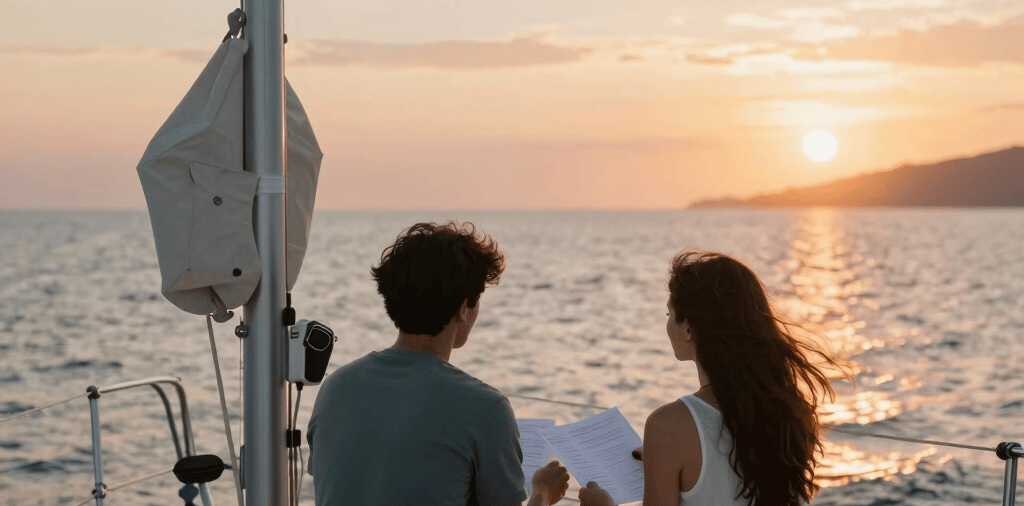

How to Plan Your Cruising Life (Without Feeling Overwhelmed)
If you’ve ever stayed up too late Googling “how to start a sailing life” or “can I really live aboard a boat?”
You’re not alone. That’s usually where it begins. A quiet curiosity. Then a hundred tabs open. Then… overwhelm.
Because the cruising lifestyle can feel like this massive, complicated leap. Boats, money, navigation, weather, downsizing your entire life. It’s a lot.
But here’s the truth most people don’t say clearly enough:
You don’t start by sailing away.
You start by planning differently.
We didn’t wake up one day and leave. We spent years building toward it, slowly, imperfectly, and very intentionally.
And if you’re somewhere between “this feels impossible” and “okay, maybe we could actually do this” - this is where you begin.
What “Planning Your Cruising Life” Actually Means
Planning isn’t about having everything figured out. It’s about turning a vague dream into something you can touch.
For us, that looked like:
Taking sailing lessons early on (one of the best investments we made)
Sailing on a local lake for years while raising our kids
Saving money consistently, even when it felt slow
Talking through the “what ifs” more times than I can count
We weren’t living aboard yet, but we were already building the foundation for a cruising lifestyle.
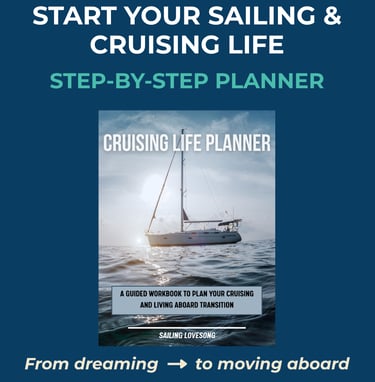
Planning is where confidence starts. That's why we created our Cruising Life Planner.
Step 1: Define Your Version of the Cruising Lifestyle
Before budgets, before boats… you need clarity. Because “cruising” means very different things depending on who you ask.
Ask yourself:
Do you want to sail full-time or seasonally?
Are you dreaming of the Bahamas… or global travel?
Are you going as a couple, solo, or eventually with family visiting?
Do you picture slow travel or constant movement?
We didn’t have all the answers at first. But we started narrowing it down. And that changes everything.
You don’t need a perfect plan. You just need a direction.
Step 2: Start Where You Are (Not Where You Think You Should Be)
This is where most people get stuck. They think:
“I don’t have enough experience.”
“We don’t have the right boat.”
“We need more money first.”
We said all of that too. So we started small.
We took sailing lessons.
We practiced on a lake.
We learned how wind actually feels, not just how it looks on YouTube.
And slowly, the unknown became familiar.
If you’re at the beginning, your version might look like:
Taking an intro sailing course
Joining a local sailing club
Crewing for someone else
Spending weekends on the water
It doesn’t need to be dramatic. It just needs to be real.
Step 3: Build a Long-Term Cruising Plan
Here’s where things start to feel more grounded.
Instead of asking “Can we do this?”
You start asking, “What would it take?”
Break it into pieces:
Timeline - 1 year? 3 years? 5+ years?
Finances - Savings goals, Expected cruising costs, Emergency fund
Skills - Sailing, Navigation, Boat systems, Maintenance
Lifestyle shifts - Housing (rent, sell, or keep?), Work or income streams, Downsizing
When we were planning, this wasn’t neat. It was messy lists, notes, conversations, second guesses. That’s normal.
If you want something more structured, this is exactly where a Cruising Life Planner or Workbook can help - something that takes all those scattered thoughts and organizes them into a step-by-step path.
(That’s actually why we created ours. Because we needed it first.)
Step 4: Start Financially Preparing for Living Aboard
Money is one of the biggest mental blocks. Not always because of the amount, but because of the unknown.
We spent years saving while living a normal land life. Nothing extreme. Just consistent. And more importantly, we started understanding what cruising actually costs.
A few key areas to think about:
Boat purchase and refit
Marina or mooring fees
Insurance
Maintenance and repairs
Provisioning (food, water, supplies)
Travel and customs fees
If you’re in this stage, having a Cruising Budget Planner makes a huge difference. Not because it gives you perfect numbers, but because it gives you visibility. And visibility reduces fear.
Step 5: Begin Downsizing Early (Earlier Than You Think)
This part surprised us. We thought downsizing would be quick. It wasn’t. We had a house. Kids. Years of life built up.
So we started slowly:
Sorting what we actually used
Letting go of things that didn’t matter anymore
Keeping what we truly wanted to bring aboard
And eventually, we packed what mattered, rented out the house, and let go of the rest. It wasn’t just physical, it was emotional too.
If you’re even thinking about cruising, start this early. Future you will be grateful.
Step 6: Research and Choose the Right Boat (For You)
This is where things get exciting and overwhelming again. We spent a lot of time here. Looking at boats. Comparing layouts. Figuring out what we actually needed vs what looked nice.
Then we took a road trip along the East Coast, visiting boats in person. And when we found the one that felt right. We went through the full process:
Survey
Sea trial
Negotiation
Insurance
It wasn’t fast, but it was worth doing carefully. Your boat isn’t just a purchase. It’s your home.
Step 7: Prepare for the Transition to Living Aboard
This stage doesn’t get talked about enough. Because it’s not just logistics. It’s a full life shift. For us, that meant:
Moving across the country
Living in a boatyard and marina
Learning how to maintain the boat
Figuring out provisioning
Adjusting to smaller spaces
Even coordinating vet care for our cats
It wasn’t glamorous. It was learning, adjusting, and sometimes wondering what we’d gotten ourselves into. And also, feeling more aligned than we had in years.
Step 8: Take the First Real Step (Even If It’s Small)
Right now, you don’t need to plan everything. You just need to start. That might be:
Writing down your “why”
Taking a sailing lesson
Creating a rough 3-year plan
Starting a savings account for cruising
Downloading a planning checklist and organizing your thoughts
Small steps build momentum, and momentum builds belief.
You Don’t Have to Figure This Out Alone
This part matters more than any checklist. Because one of the biggest fears is:
“What if we’re out there… and we don’t know what we’re doing?”
We felt that too. And honestly… you learn as you go. We learned while sailing down the ICW. We learned while provisioning.
We learned while fixing things that broke. You don’t arrive fully prepared.
You become prepared by doing it.
FAQ: Planning a Cruising Lifestyle
How long does it take to plan a cruising life?
Most people take 2–5 years, depending on finances, experience, and life situation. It doesn’t have to be rushed.
Do I need sailing experience before cruising?
Yes, but you can start small. Lessons, local sailing, and practice go a long way before living aboard.
How much money do you need to start cruising?
It varies widely, but planning your budget early helps you understand what’s realistic for your lifestyle.
Can you plan a cruising life with a family?
Absolutely. Many do. It just requires thoughtful planning around education, space, and logistics.
Is living aboard isolating?
It can be at times, but the cruising community is strong, welcoming, and often very connected. Bottom line is - it's only as isolating as you would like for it to be.
Contact
Questions? Reach out anytime!
Email US
info@sailinglovesong.com
© 2026. Nursing & Health Science Central.
All rights reserved.
Return, Refund & Dispute Policy